Florida’s New Anchoring Laws: What Every Boater Needs to Know in 2025–2026
If you own a boat in Florida — or plan to cruise through Florida waters — the rules have changed. Starting in 2025, the state rolled out a series of new anchoring regulations that affect everyone from weekend anglers to full-time liveaboards to transient cruisers heading south for the winter.
This is not a minor tweak. Florida has introduced overnight anchoring limits, long-term anchoring permits, expanded no-anchor zones around seaports, tougher derelict vessel enforcement, and given local governments more power to regulate their own waterways.
Here is what changed, who it affects, and what you need to do.
The 30-Day Overnight Anchoring Rule (HB 481)
The headline law. In counties with populations over 1.5 million, you are now limited to 30 days of overnight anchoring in the same location within any six-month period. That is down from the previous 45-day limit.
Which counties does this affect right now?
- Miami-Dade (pop. ~2.7M)
- Broward (pop. ~1.9M)
- Palm Beach (pop. ~1.5M)
- Hillsborough (pop. ~1.5M)
Plus any area designated as a “critical state concern” under Florida law.
What this means in practice: If you are anchored overnight in Biscayne Bay, the Miami River, or anywhere in these four counties, you cannot stay in the same spot for more than 30 days out of every 180 days. The clock is running from the day you arrive.
Anchoring Limitation Areas in Biscayne Bay
On top of the 30-day rule, specific high-traffic areas in Biscayne Bay are now designated “anchoring limitation areas” where overnight anchoring is prohibited entirely. These include waters around Palm Island, Hibiscus Island, Star Island, the Venetian Islands, and the Sunset Islands in Miami-Dade. The only exceptions are permitted construction vessels or boats in a lawful mooring field agreement.
The Long-Term Anchoring Permit (SB 164)
Effective January 1, 2026, any vessel anchored for 14 or more days within a 30-day period must have a long-term anchoring permit issued by the Florida Fish and Wildlife Conservation Commission (FWC).
Key details:
- The permit is free
- Available online through the FWC
- Valid for one year
- You do NOT need to relocate as long as you stay within one linear nautical mile of your anchored position
- If you move more than one nautical mile, you must update the permit with your new location
Penalties for not having the permit:
- 1st offense: $100 fine
- 2nd offense: $250 fine
- 3rd and subsequent: $500 fine
Pro tip: Even if you are not required to get the permit yet, consider getting one anyway. The FWC uses permit contact info during storm recovery to reach vessel owners. It could save your boat.
Expanded No-Anchor Buffer Zones
Florida Statute § 327.4109 now prohibits anchoring or mooring:
- Within 150 feet of any public or private marina, boat ramp, boatyard, or vessel launching facility
- Within 500 feet of a superyacht repair facility (vessels 120+ feet)
- Within 300 feet of a public mooring field boundary (increased from the old 100-foot buffer)
- Inside a public mooring field unless you have a lawful contractual agreement to be there
Exceptions That Still Apply
You CAN anchor within these zones if:
- You are a government vessel
- You are a construction or dredging vessel on an active job site
- You are a commercial fishing vessel actively engaged in fishing
- You are recreational fishing and persons onboard are actively tending fishing gear
- You experience mechanical failure posing an unreasonable risk (up to 5 business days or until repaired)
- Imminent weather conditions pose an unreasonable risk (including hurricanes and tropical storms)
The 5,000-Foot Seaport No-Anchor Zone (SB 594)
Senate Bill 594 proposes a 5,000-foot (nearly one nautical mile) no-anchoring zone around major Florida seaports, including:
- Port Miami
- Port Everglades
- Port Canaveral
- Port of Tampa Bay
- Port of Jacksonville
- Port of Palm Beach
This is a significant expansion from previous rules. Boating advocacy groups have raised concerns that this broad restriction may conflict with federal law, which generally allows anchoring in navigable waters unless specifically prohibited by the Coast Guard.
Tougher Derelict & At-Risk Vessel Rules (SB 164)
The state is cracking down hard on derelict and “at-risk” vessels. Here is what changed:
- Effective Means of Propulsion (EMP): Law enforcement can now request an EMP evaluation on any vessel. If the owner is present, the evaluation must be conducted immediately. If absent, within 48 hours of notification.
- Three Strikes Rule: If a vessel owner receives three citations for at-risk conditions within 24 months, the vessel is designated a public nuisance and can be removed like a derelict vessel.
- Mailed Citations: FWC can now mail citations for expired registration and long-term anchoring violations — no in-person stop required.
- Ownership Clarity: A valid vessel title is now prima facie evidence of ownership, making it easier to hold owners accountable.
The Boater Freedom Act (SB 1388)
Not all of the 2025 legislation restricts boaters. The Boater Freedom Act (effective July 1, 2025) limits the ability of law enforcement to conduct random vessel stops:
- Officers can no longer stop a vessel solely for safety or marine sanitation equipment inspections
- They now need probable cause for a separate violation of Chapter 327 F.S. before boarding
This is a win for boaters who felt that safety stops were being used as a pretext for broader enforcement. You still need all required safety equipment onboard — but you cannot be pulled over just to check it.
Local Government Authority Returns
Back in 2006, Florida stripped local governments of the ability to create their own anchoring rules because municipalities were passing extreme and inconsistent restrictions. Under the new laws, that authority is partially restored. Local governments can now set anchoring restrictions outside designated mooring fields.
What does this mean for cruisers? A potential patchwork of rules. Miami-Dade may have different anchoring ordinances than Broward. Monroe County (the Keys) may differ from Lee County (Fort Myers). If you are transiting Florida waters, you will need to check local ordinances before you drop the hook.
Who Is Most Affected
Liveaboard boaters face the biggest impact. If you live on your boat at anchor in Miami-Dade, Broward, Palm Beach, or Hillsborough, the 30-day limit means you need to relocate or find a mooring/marina slip — and slips in South Florida are scarce and expensive.
Transient cruisers (snowbirds, Great Loopers, ICW transients) need to plan their stays more carefully and factor in the long-term anchoring permit if staying more than two weeks.
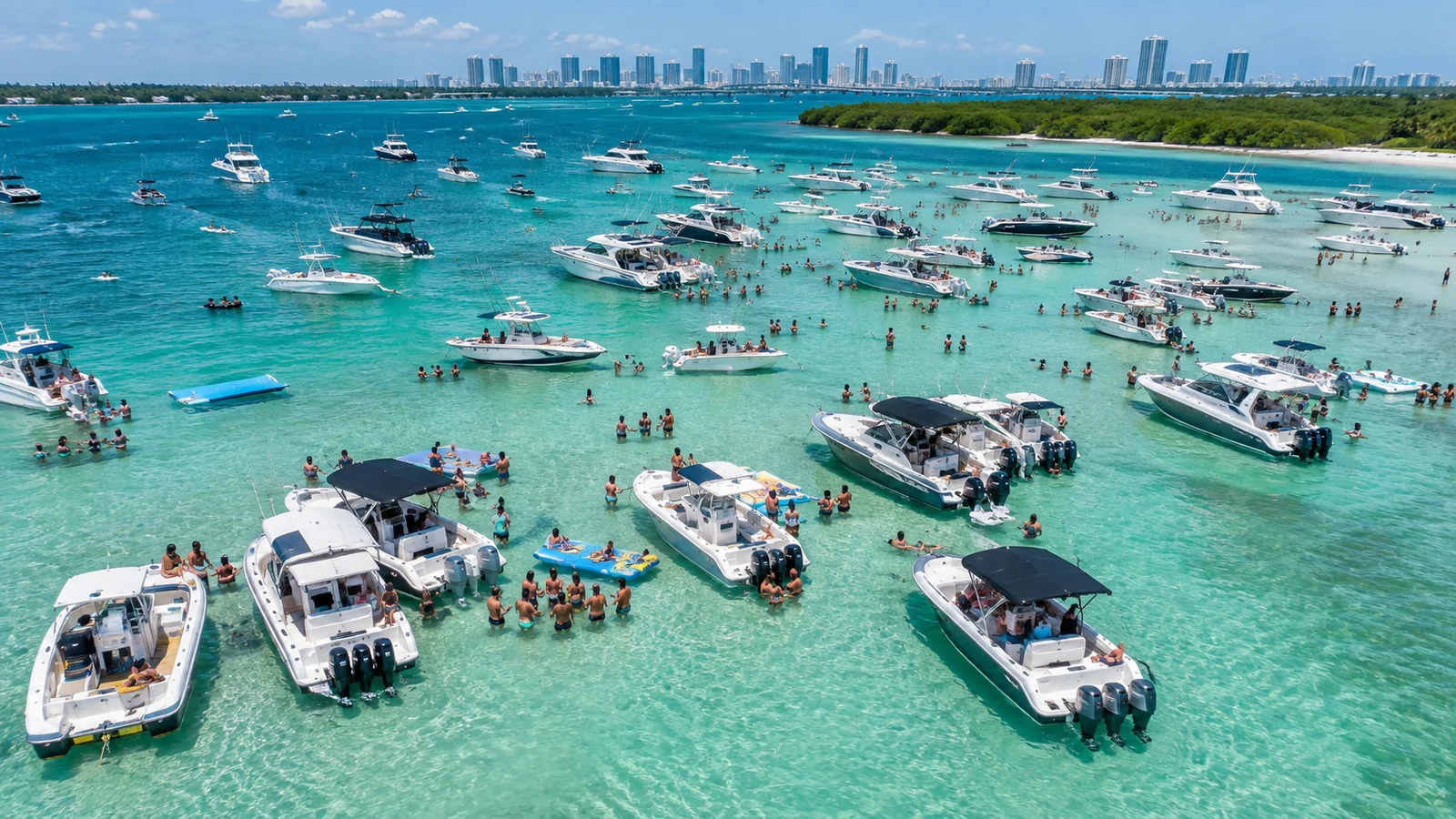
Weekend and day boaters are largely unaffected. Day anchoring for swimming, fishing, and rafting up is not restricted. The rules focus on overnight anchoring.
Commercial fishermen have explicit exemptions while actively engaged in fishing.
What You Should Do Right Now
- Know which county you are in. The 30-day rule only applies to counties with 1.5M+ population (for now). But more counties may adopt restrictions under the new local authority powers.
- Get the long-term anchoring permit. It is free and takes minutes. Do it before January 2026 to be ahead of the curve. Visit the FWC website for details.
- Keep your registration current. Expired registration is now grounds for a mailed citation — you do not even need to be stopped in person.
- Ensure your vessel can move under its own power. The EMP evaluation rule means law enforcement can ask you to prove it on the spot.
- Check local ordinances before anchoring overnight in any Florida municipality. The days of “one set of rules for the whole state” are over.
- Know your rights under the Boater Freedom Act. Officers need probable cause for a separate violation before they can board your vessel for a safety inspection.
The Bigger Picture
Florida’s marine industry is worth over $23 billion annually. The state has more registered boats than any other in the country. These new anchoring laws are an attempt to balance public waterway access, environmental protection, and the very real problem of abandoned and derelict vessels — but they come with tradeoffs.
Critics argue the laws punish responsible boaters instead of focusing enforcement on actual derelict vessels. Supporters say accountability was overdue. The truth is probably somewhere in between — and the rules will likely continue to evolve as counties test their new authority.
One thing is certain: the days of anchoring anywhere in Florida for as long as you want with no questions asked are over. Whether you agree with the direction or not, knowing the rules will keep you out of trouble and on the water.
Have questions about how these laws affect your specific situation? Post in the OutboardListings.com Forums or contact us. We are tracking these regulations as they develop and will update this post as new rules take effect.
Sources: Florida Fish & Wildlife Conservation Commission (myfwc.com), Florida Legislature (flsenate.gov), Florida Sea Grant, Southern Boating, CBS Miami, WLRN. This article is for informational purposes only and does not constitute legal advice. Always verify current regulations with the FWC and your local municipality.