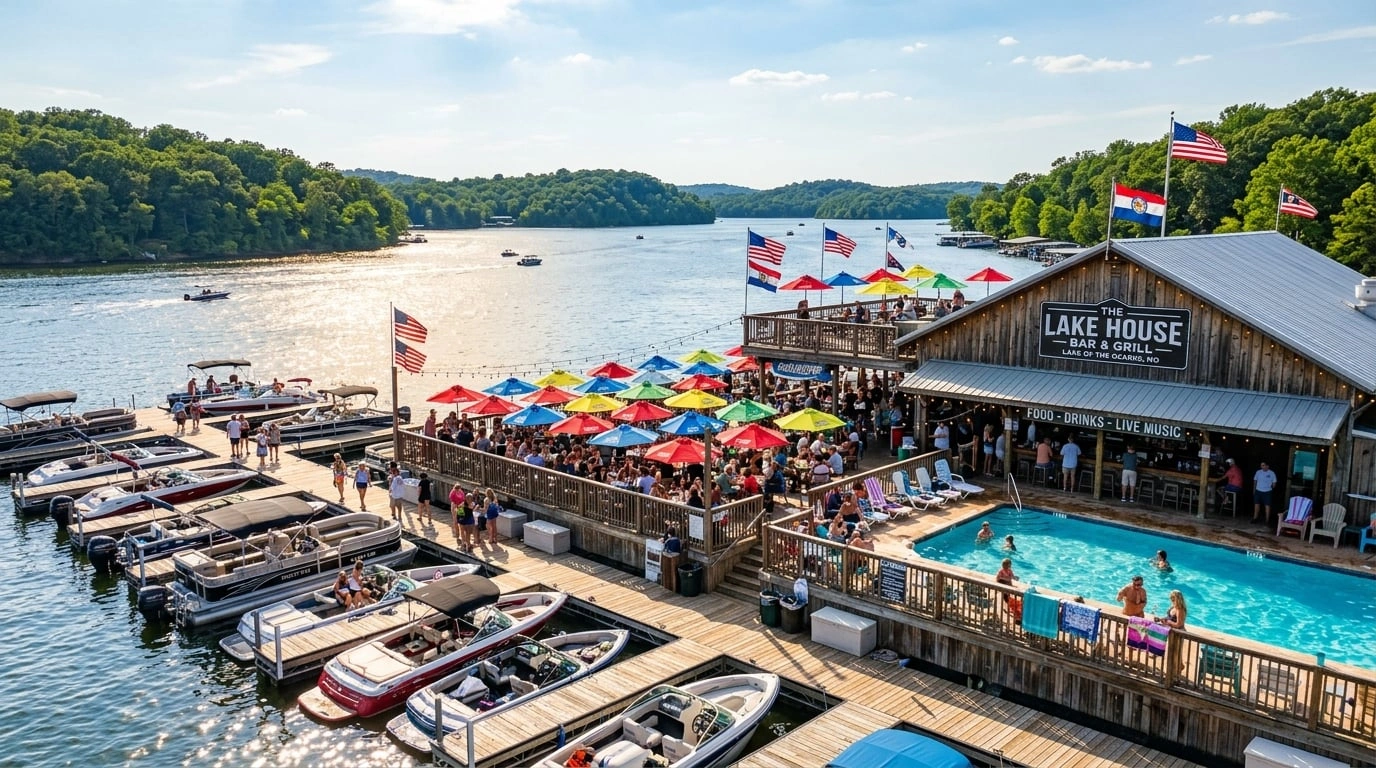
Boating Lake Powell & the Colorado River — Marinas, Houseboats & the World’s Largest Floating Restaurant
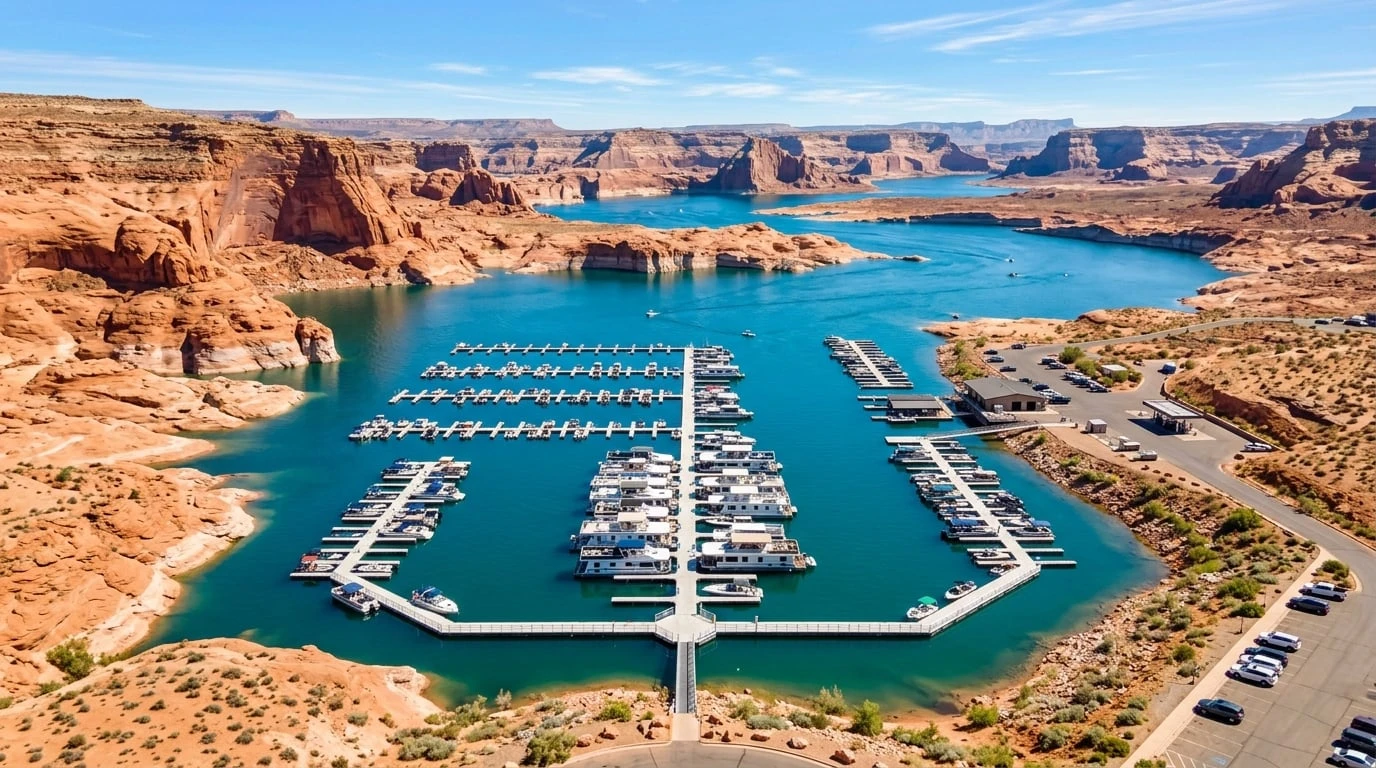
Lake Powell is 161,390 acres of deep blue water surrounded by towering red Navajo sandstone — one of the most dramatic boating destinations in the American West. Located on the Colorado River at the Arizona–Utah border inside Glen Canyon National Recreation Area, it offers 1,960 miles of shoreline, four full-service marinas, and the only floating restaurant of its scale on Earth.
Antelope Point Marina — The Navajo Nation’s Crown Jewel
Antelope Point Marina sits on the Navajo Nation side of Lake Powell, roughly 5 miles east of Page, Arizona. It is the newest of the lake’s four marinas and the only one operated in partnership with the Navajo Nation. The address is 537 Marina Parkway HWY N22 B, Page, AZ 86040 and the main line is 928.645.5900.
Services include wet slips, a fuel dock, boat rentals (powerboats, personal watercraft, and stand-up paddleboards), houseboat rentals, a pumpout station, and a ship store. But the real draw is upstairs.
Jádí’Tooh — The World’s Largest Floating Restaurant
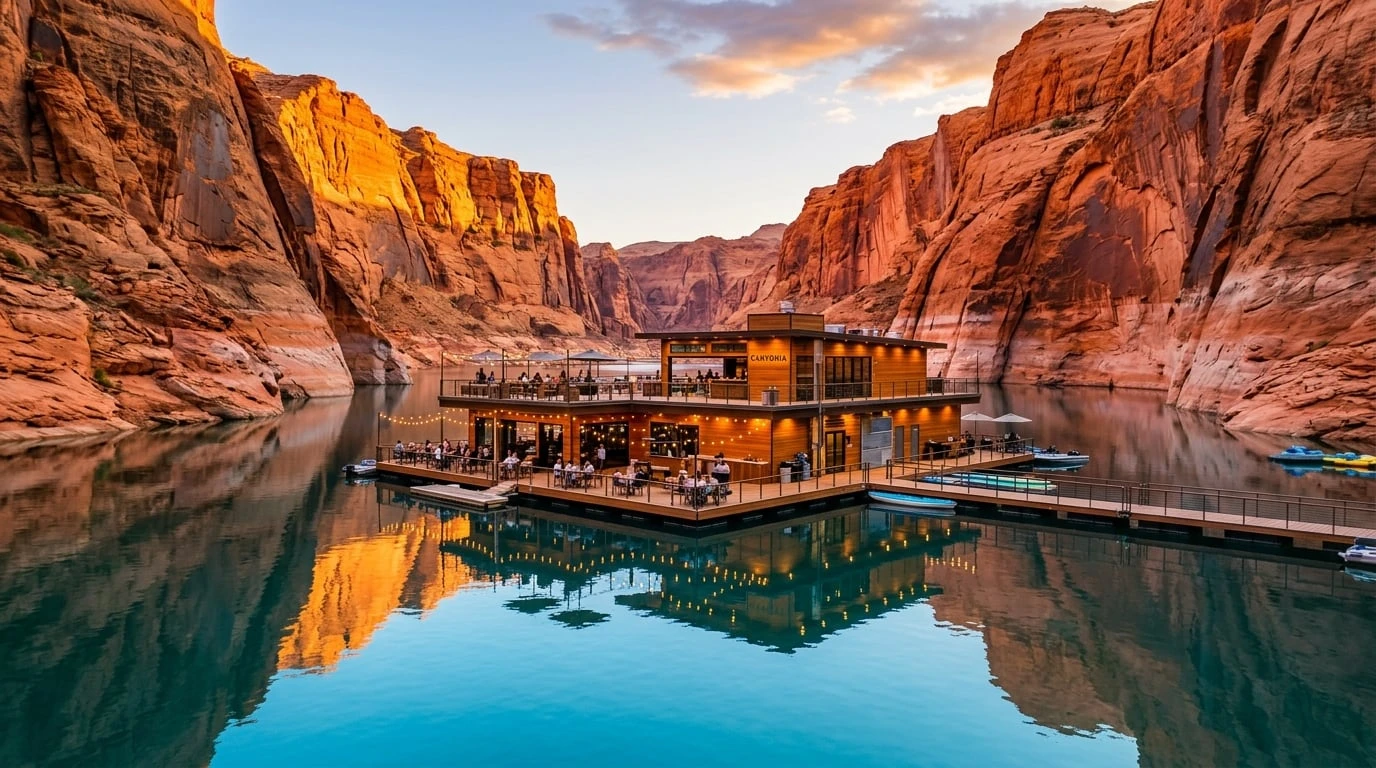
Perched on the water at Antelope Point Marina, Jádí’Tooh (Navajo for “Antelope Water”) is a 27,000-square-foot floating dining experience with 360-degree views of Lake Powell’s red sandstone canyon walls.
The menu leans Southwestern — Navajo tacos, fire-roasted corn, green-chile burgers, and fresh-caught fish. The full bar features Arizona craft beers and a sunset cocktail list. Indoor and outdoor seating are both available, and boaters can pull right up to the dock and walk in.
Tip: Arrive by boat before 5 PM on summer weekends to secure dock space. The restaurant fills fast after sunset.
See It for Yourself
Desert Rat Explorations shot this video at Antelope Point Marina and on the water at Lake Powell — the floating restaurant, the marina, and the current state of the lake in 2026:
Other Lake Powell Marinas
Wahweap Marina is the largest and most established, located just 6 miles north of Page on the Arizona side. It has full-service slips, a fuel dock, boat and houseboat rentals, a paved launch ramp, and dry storage. This is where most first-time Lake Powell visitors launch from. Wahweap also houses the Lake Powell Resort, making it a one-stop destination for boaters who want lodging, dining, and marina services in one place.
Bullfrog Marina sits on the Utah side, roughly 70 miles north of Wahweap by water. It offers slips, fuel, boat rentals, a launch ramp, and a campground. The ferry from Halls Crossing docks here. Bullfrog is the preferred launch point for boaters coming from Salt Lake City or southern Utah — the drive from SLC is about 4.5 hours via Highway 95, and the scenery along the way through Capitol Reef country is worth the trip on its own.
Halls Crossing Marina is the smallest of the four, also on the Utah side. It provides fuel, rentals, a launch ramp, and the car-and-boat ferry that crosses to Bullfrog — one of the most scenic short crossings in the country. The ferry runs on a fixed schedule (typically four crossings per day in summer), so plan your departure accordingly or you could be waiting a couple of hours.
Marina Fuel Tip: Fuel prices at Lake Powell marinas run significantly higher than on-shore stations in Page. Fill your tanks in town before launching whenever possible. Most marinas charge a 30–40% premium over retail gas prices.
Houseboating Lake Powell
Lake Powell is widely considered the best houseboating lake in North America. Multi-day trips let you explore narrow side canyons, beach your houseboat on a sandstone ledge, and sleep under some of the darkest skies in the lower 48. Most rental houseboats sleep 10–12 and include a rooftop water slide, gas grill, and a towable dinghy.
The typical houseboat experience goes like this: pick up your boat at Wahweap or Antelope Point in the morning, spend the first day cruising up-lake into one of the major canyon systems (Navajo, Padre Bay, or Warm Creek), find a secluded beach with enough depth to nose in, and anchor for the night. Most groups bring a smaller powerboat or personal watercraft towed behind the houseboat for canyon exploration and wakeboarding.
Peak season is June through August. Book 3–6 months in advance for summer dates. A typical summer week in a mid-range houseboat runs $4,000–$8,000 depending on vessel size and amenities. Off-season (October through March) offers lower rates — sometimes 40–50% off — cooler temps, and virtually no crowds. Spring and fall are arguably the best times to visit: air temps in the 70s and 80s, water warm enough to swim, and you may have entire canyons to yourself.
What to bring on a houseboat trip: Sunscreen (you will burn faster than you think at 3,700 feet elevation with water reflection), reef-safe since the lake feeds the Colorado River system, towels, a shade canopy or pop-up tent for the beach, a good anchor (the included anchors are often undersized for wind events), and enough food and water for your entire trip — there are no grocery stores on the lake.
Colorado River Canyon Runs — Below the Dam
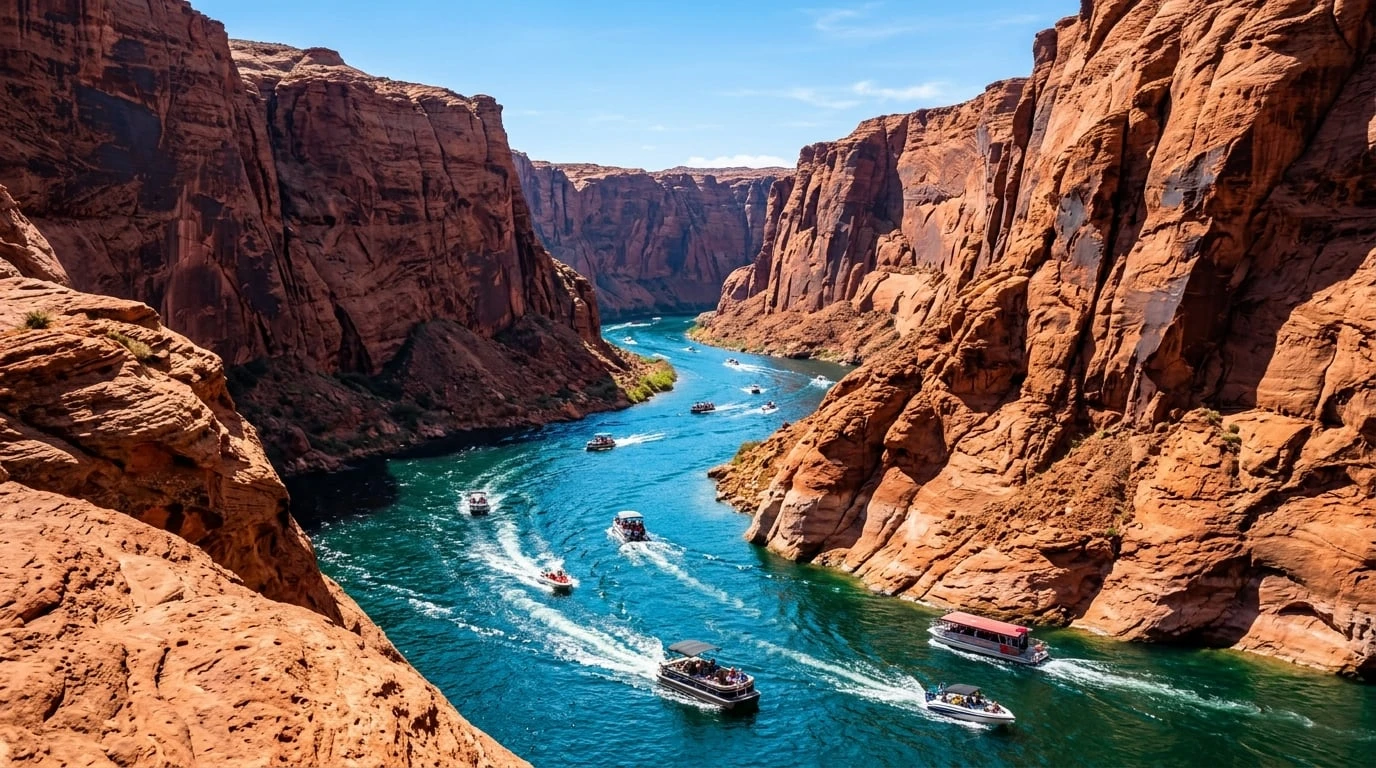
Below Glen Canyon Dam, the Colorado River enters a completely different world. The water runs emerald green, cold (around 46°F year-round), and swift. The Lower River Outboard Run from Lees Ferry downstream through Marble Canyon is a bucket-list trip for serious outboard boaters — towering Kaibab Limestone walls, Horseshoe Bend from water level, and virtually no other traffic on weekdays.
The run requires a capable outboard rig (most boaters use center consoles or aluminum jet boats in the 18–22 foot range), proper cold-water safety gear including PFDs and dry bags, and a permit from Glen Canyon National Recreation Area. The water temperature hovers around 46°F year-round below the dam regardless of air temperature, so a fall overboard without a PFD is a genuine survival situation.
The launch point at Lees Ferry is also the put-in for Grand Canyon rafting trips, so you will share the parking lot with commercial outfitters loading multi-day rafts. The boat ramp itself is well-maintained concrete with good traction even when wet. Upstream from the ramp, the river flows through a tight gorge with intermittent rapids that are navigable in most outboard rigs but demand attention to flow patterns and submerged rocks.
Check with the park service for current launch schedules and flow rates. Dam releases can change water levels several feet in a single day, and high-flow events in spring can make certain sections of Marble Canyon impassable for small boats.
Must-See Spots by Boat
- Rainbow Bridge — The world’s largest natural bridge, accessible only by boat. A 50-mile cruise from Wahweap through a series of increasingly narrow canyons.
- Navajo Canyon — Deep, narrow, and dramatic. Red walls rise 500+ feet on both sides. Perfect for kayaks or small outboard tenders.
- Cathedral in the Desert — A grotto-style canyon with alcoves, seeps, and hanging gardens. Water levels must be right to access it.
- Labyrinth Canyon — Winding, multi-branched, and great for exploring with a trolling motor or paddle.
- Horseshoe Bend — Best seen from the river below Glen Canyon Dam. The iconic overlook is 1,000 feet above you. Seeing it from water level is a completely different experience than the tourist viewpoint — you feel the scale of the canyon in a way no photograph can capture.
- Padre Bay — One of the widest open-water areas on the lake, with sandy beaches and stunning views of Gunsight Butte. A favorite for wakeboarding, skiing, and large group gatherings.
- Warm Creek Bay — A large cove on the Utah side with calm water and multiple sandy beaches. Popular for beaching houseboats and camping overnight. The sunsets here are legendary.
- Dangling Rope Marina — The only floating fuel station on the lake, accessible only by boat. Located roughly 42 miles up-lake from Wahweap, it is an essential refueling stop for boaters heading to Rainbow Bridge or the upper lake canyons.
Water Safety & Conditions
Lake Powell is a desert reservoir, and desert weather can turn fast. Afternoon thunderstorms are common from July through September, bringing sudden wind gusts that can exceed 50 mph and kick up 3–4 foot whitecaps in open water areas like Padre Bay and Wahweap Bay. If you see dark clouds building over the Kaiparowits Plateau, get to shore or into a protected canyon.
Water temperatures on the lake surface range from 50°F in early spring to 85°F in late July. Below 15 feet, the thermocline drops temperatures significantly — divers and swimmers should be aware. On the Colorado River below the dam, water is a constant 46°F regardless of season.
Life jackets are required for all children under 12 on Lake Powell, and the National Park Service strongly recommends them for all passengers. Drowning is the leading cause of death at Glen Canyon NRA, and most incidents involve boaters who were not wearing a PFD.
A Brief History of the Lake
Lake Powell was created by the construction of Glen Canyon Dam on the Colorado River, authorized by Congress in 1956 and completed in 1966. The reservoir took 17 years to fill, reaching full pool in 1980 at an elevation of 3,700 feet. The dam itself is 710 feet tall and generates hydroelectric power for the western grid.
The lake is named after John Wesley Powell, the one-armed Civil War veteran and geologist who led the first documented expedition down the Colorado River in 1869. Powell’s expedition launched from Green River, Wyoming and navigated through the Grand Canyon — one of the most daring feats of exploration in American history.
In recent years, water levels have fluctuated significantly due to drought conditions across the Colorado River Basin. The lake dropped to historic lows in 2022, exposing canyon features that had been underwater for decades. As of 2026, water levels have partially recovered, but boaters should always check current conditions before launching.
Getting There & Launch Logistics
Page, Arizona is the gateway city. It has a regional airport (PGA) with seasonal service, and is roughly 2 hours from Flagstaff and 4.5 hours from Phoenix by car. All four marinas have paved launch ramps, but arrive before 8 AM on summer weekends to avoid 30+ minute wait times.
A Glen Canyon NRA pass is required ($30/vehicle for 7 days or $55 annual). Watercraft inspection may be required depending on your state of origin — check for quagga mussel inspection stations before you launch.
Related: Lake Powell Boating Guide · Arizona Boat Dealers · Boating Events Calendar · Browse Outboard Listings